
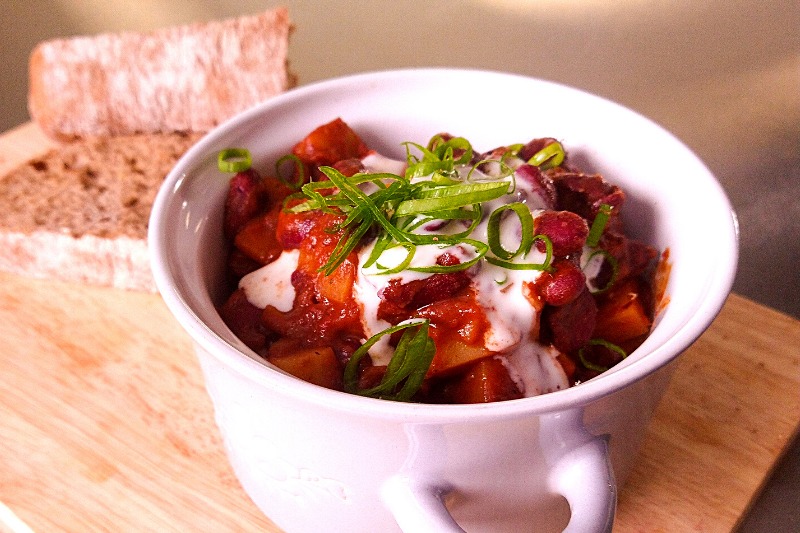
Series legume video recipes Today we are adding another recipe for a quick Bean goulash with bread.
In this article we will focus on how avoid a bloated belly after consuming legumes, building on recently published articles about lentil mayonnaise and others legume video recipes.
Legume video recipe
The sixth recipe in the series legume video recipes is a recipe for a quick Bean stewWe will use it in sterilized beans and therein lies its speed. And this is also a way to avoid a bloated belly.
On the other hand, when a little planning, we can also prepare this goulash from dry beans.
A few more tips from chef Ján Dudawith whom we filmed the video recipe:
"Friends, if you want a slightly unconventional bean stew, you can easily use cocoa, cinnamon, pour it on red wine, but at the beginning, so that the alcohol evaporates and only the taste of the wine remains. And please, do not thicken never goulash flour", you'd better grate the potato."
chef Jan Duda
From the Green Dining Room, we wish you a good appetite!
Are you getting enough protein?
In previous articles, we have already mentioned that legumes contain high share protein and therefore they are considered the most important foods healthy vegan diet, as well as for effective animal substitute products.
In addition to protein, they also contain a large number of other health-beneficial substances:
- Carbohydrates
- Potassium
- Calcium
- Iron
- B vitamins
- Sprouted legumes are a good source of vitamin C
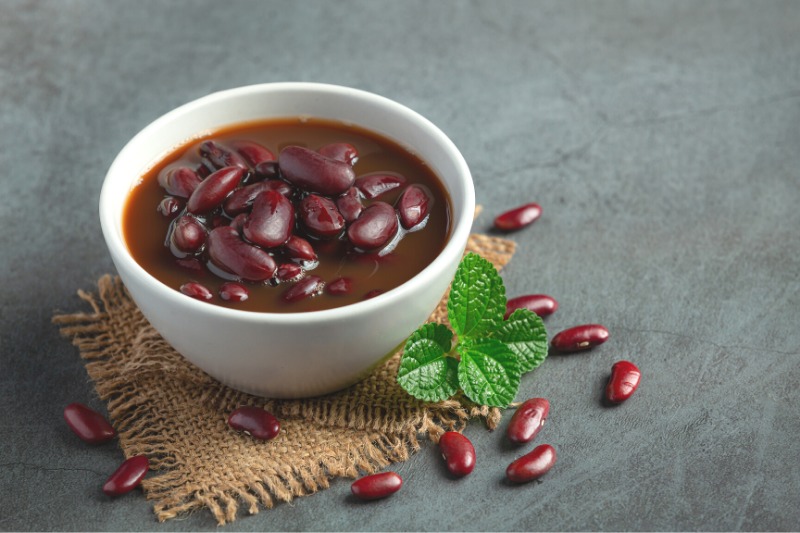
He "farts" after eating beans.
Despite the large number of health-beneficial substances, legumes some people purposely they avoidThey cause various digestive problems, such as: inflation.
These digestive gases are responsible for oligosaccharideswhich legumes contain.
Oligosaccharides are a type of complex sugars, which our body can't digest and so they reach the unaltered form colon, where they ferment and produce mainly carbon dioxide.
However, there is also large group of people, such as vegans and vegetarians, for whom these nutritious foods do not none, or at least problemsWhy is this so?
First of all, you are our the body gets used to digestion of what we usually eat. And since this group of people already knows about the importance of legumes in a balanced and healthy diet, consume them regularly. So our body adapts and gets used to the digestion legumes.
And secondly, it is important to know how you prepare legumesto be easier to digestLet's see together what to do with those oligosaccharides.

How to ensure better digestibility of legumes
Oligosaccharides are soluble in water and so we can easily get rid of them if the legumes are soaked before cooking soak in water. When soaking, releasing oligosaccharides into water and legumes become more easily digestible and they also cook faster. So the water that the legumes were soaked in and the oligosaccharides were released into it, we will merge and we will use it for cooking fresh.
Digestibility legumes will also further facilitate kombu seaweed, which at the same time shorten and cooking time. We add it to the bottom of the pot while cooking. (We also mentioned kombu seaweed in article about soy meat.)
Salt we add up to in conclusion cooking, otherwise it would prevent sufficient cooking.
And spices like fennel or caraway.
Source:
- Paul Pitchford – Natural food for health
- https://www.verywellfit.com/oligosaccharides-and-prebiotics-health-benefits-2242223
- https://www.napalete.sk/travenie-strukovin-ulahci-ich-namacanie-alebo-naklicenie/
- https://www.opotravinach.sk/sciences/view/Ako%20UPRAVI%C5%A4%20strukoviny
- Food photo created by jcomp – www.freepik.com
- Background photo created by benzoix – www.freepik.com
- The author of the bean stew photo – Lucy
 English
  Slovenčina