
Survey result:
Chcú sa ľudia v akademickom prostredí stravovať rastlinne?
The Green Dining Room held in January 2022 student and employee dining survey universities. Answer, whether they want študenti a zamestnanci to eat plant-based, you will learn from results our survey.

Primary purpose of the survey was to find out, based on cooperation with university students, employees and other collaborators, how many of them should interest in eating in university cafeterias if it is served healthy and plant-based diet.
In addition, we interested:
- what diet prefer,
- but also practical suggestions for implementation healthy, plant-based foods at Slovak universities.
Since they were ours priority:
- authenticity
- objectivity results and also
- diversity respondents and answers,
survey on our websites or social networks Green Dining Room and Slovak Vegan Society, officially not published.
Are you curious? How did the survey turn out?? So let's take a look together at statistical data, but also statements, opinions and thought-provoking ideay that the survey results brought us.
You can see how the survey was conducted here.
Presentation of survey results in PDF format
Who pleased us with their participation?
The survey 1076 respondents participated from several universities across the world Slovakia, including:
- UCM,
- UNIZA,
- SZU,
- STRONG,
- UNIPO
- UKFNR.
These schools also significantly helped by sharing the survey on your social networks.
Of the total number of respondents, 75 % women and 25 % men.

What lifestyle in terms of diet do our respondents prefer?

Interesting information was provided by the answers to the question: "How do you eat?"
The biggest group interviewed, namely 59,4 % they are just conventional diners, that is, people who consume everything without restrictions.
However, surprisingly, 1/5 boarders (20.6 %) is related to reductarian, that is, to people who are trying meat consumption and other animal products significantly reduce.
Other encouraging news, despite lower numbers, were the following three categories:
- vegetarians – those who do not eat meat or fish (5,9 %),
- vegans – those who do not eat any animal foods (3,9 %) and
- pescatarianswho do not eat meat but eat fish (3,5%).
And finally, people with different allergies in our survey
formed 0,1 %.
CONVENTIONAL boarders and their reasons
Answers related exclusively to people consuming all foods, we divided into 6 areas:
And what is actually hidden behind them? Let's take a closer look at them.
Respondents could mark multiple answers:
- Diverse I consider the diet to be the healthiest alternative. (60,9 %)
- I am like this accustomed/-ý to eat. (53,1 %)
- I like the classic diet the most. tastes. (52,1 %)
- My family or the people around me eat the same, I eat with them. (42,7 %)
- It is cheaper than any other type of diet. (19,8 %)
- I have no other choice. restaurants in your area (8,8 %)
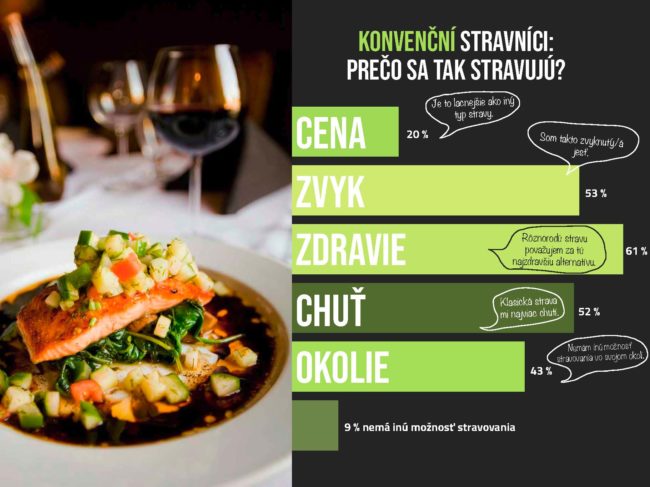
What are your reasons for eating CONVENTIONALLY?
Some of the individual responses to the question: "What are your reasons for eating conventionally?"
"I eat what I like."
"Lunches in the dining room are mainly oriented towards "classic food".
"It's easier in terms of finding food, choosing restaurants, etc."
UNCONVENTIONAL diners and their reasons

Reasons for respondents eating with certain restrictions we could divide into these 6 areas:
Here are the specifics optionsfrom which respondents could to choose:
- I have ethical reasons – I don't want to support animal farming. (42,2 %)
- I avoid certain foods from health reasons. (41,9 %)
- I have ecological reasons – I want to reduce my carbon footprint. (41,3 %)
- I am watching. calorie intake and other nutrients – I want to be fit. (34,8 %)
- I have allergy for eggs, lactose, gluten, etc. (22,3 %)
- Mine religion doesn't allow me to eat certain foods (2,8 %)
What are your reasons for UNCONVENTIONAL eating?
Some of the individual responses to the question: "What are your reasons for unconventional eating?"
"Personally, I think that eating more plant-based foods will not only help my health, but also the environment. So the more plant-based foods on my plate, the better."
"I love animals and I feel sorry for their lives because of food."
"I love this diet because it gives me the same amount of all the nutrients I need and I don't feel so burdened. I have a whole new perspective on the world."
What about the college cafeterias themselves?
All responses regarding reasons for eating were on reflection, but it was no different in the case of the remaining questions.
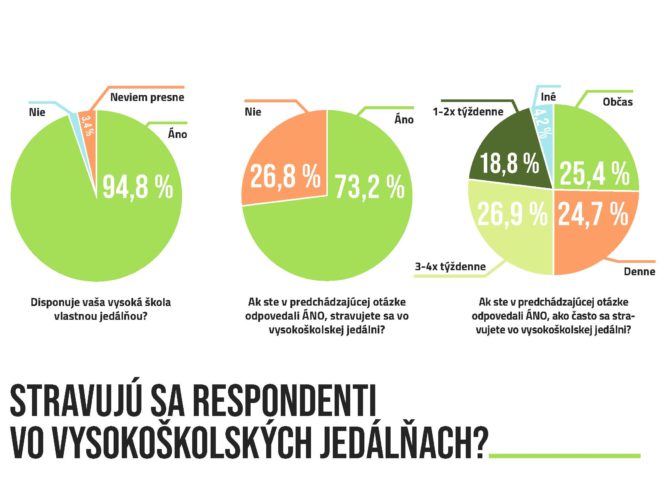
According to the survey results, up to 94.8 % of those interviewedthat they the university has its own dining room, which is positive news. On the other hand, 1.6 % respondents expressed the opposite and 3.4% of respondents are not surewhether there is such an option at their university.
Students, employees and other collaborators working at Slovak universities who have possibility of eating in dining room, so in most cases they do. It's about 73.2 % respondents.
- Daily eats at universities 24,7 % interviewed,
- 3-4 days a week will gladly use the dining room services 26,9 % interviewed,
- 1-2x per week 18.8 % people and
- sometimes eats school meals 25.4 % respondents.
Reasons for eating in a university cafeteria?
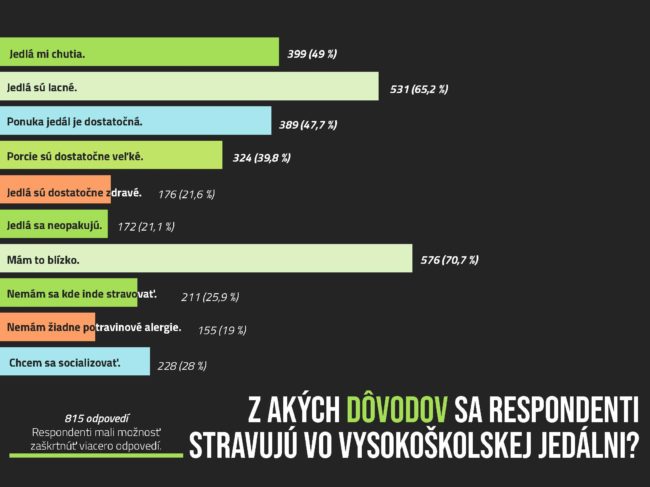
Between most common answers The following were the ones that were relevant to this question:
- I have it. close (70,7 %),
- the meals are cheap (65,2 %),
- I eat. they taste (49 %),
- the food menu is sufficient colorful (47.7 %) and
- portions are sufficient big (39,8 %).
Less represented The answers are, for example:
- socialization (28 %),
- the fact that respondents they don't have where else to eat (25.9 %)
- or that the food is sufficiently healthy (21, 6%).
Although it is not surprising that most represented The answer, from a practical and time perspective, is distance, we believe that in the future will university students and employees be particularly inclined to the canteen diet because of its taste and also popular healthy plant-based foods.
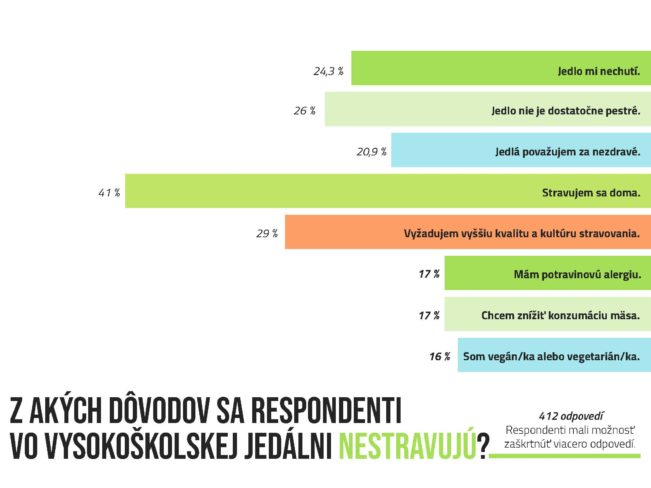
Why, on the contrary, do respondents NOT eat in the university cafeteria?
There are several reasons in this case as well.
The most respondents state:
- as the main reason home catering (40,5 %),
- whether requiring higher quality and cultures catering (28, 6 %).
According to statements others:
- is not enough food colorful (26 %)
- or simply give them food doesn't like (24,3 %).
Last but not least, some respondents consider dining room food for unhealthy (20.9 %).
Some respondents do not eat in the cafeteria because of food allergy (17 %), because of the effort reduce meat consumption (16.5 %) or because they are vegans or vegetarians (16 %).
Incentives to attract diners
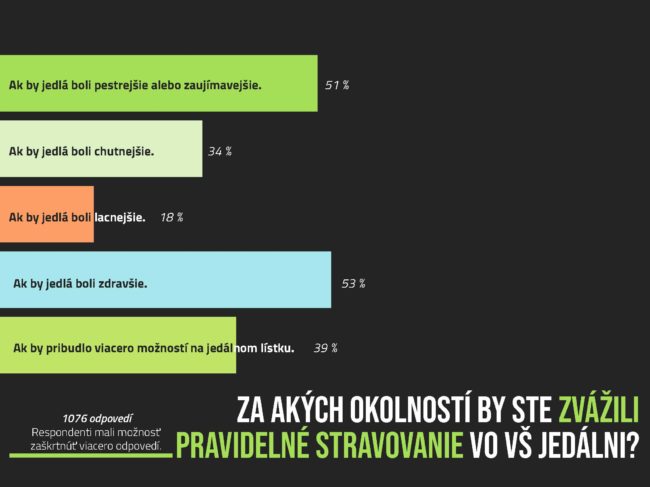
"For what circumstances would you consider regular meals in a college cafeteria?” That was exactly what our question was.
And result?
- 53,2 % of respondents would do so if they were healthier meals,
- 51,3 % of respondents would think about their diet if more varied and interesting dishes and
- 34,4 % people are inclined to more choice on the menu.
- In addition, however, 34.4 % people would welcome tastier dishes and
- 17,9 % students or employees would be pleased cheaper alternatives.
What about plant-based diets in college cafeterias?
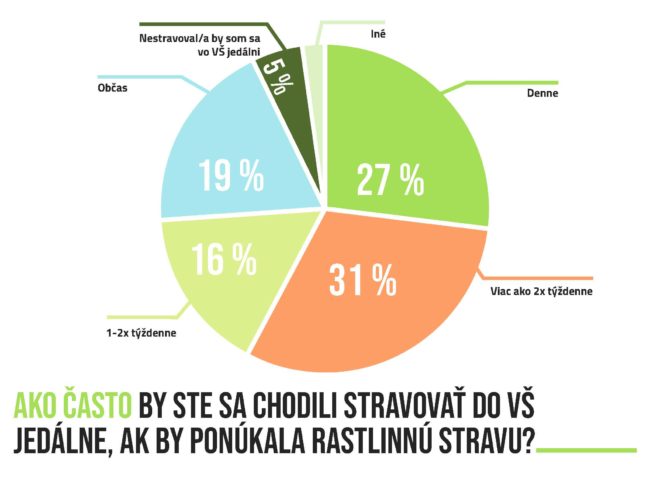
Beneficial However, for us, the responses of the respondents to the question: "How often would you go out? to feed to the university cafeteria, if it offered plant-based diet"?
We believe that we will gradually thanks project Green dining room will these succeed increase the numbers, When will the students arrive at the school cafeteria? not only to saturate and provide the necessary energy, but also with happy plant-based foods properly to enjoy.
Finally, that's up to us. what matters most - provide people healthy and tasty vegetable mealswhich they will not burden wallets or stomachs. On the contrary, plant-based foods will expand your culinary spectrum with another simple and great recipes full of colors and necessary nutrients.
Are the meals offered affordable?
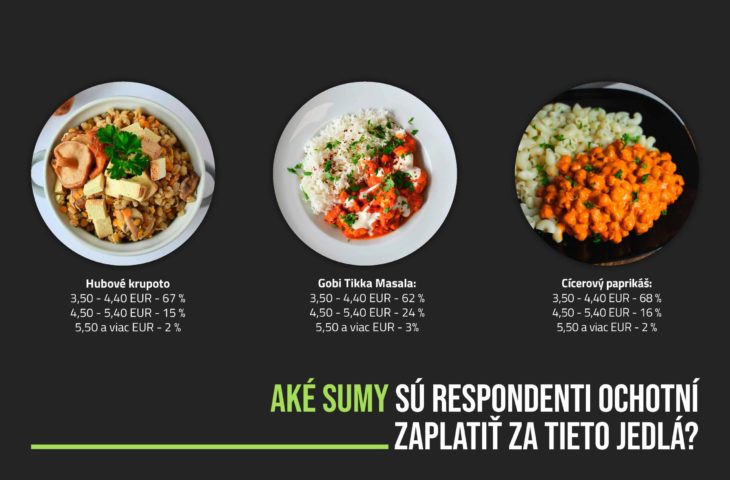
Through the survey, in addition to the frequency of use of university canteens and the reasons for eating at universities, we also addressed the topic of priceswhich are especially for students an important factor.
We therefore investigated what amounts for the meals served are for respondents acceptable and which ones already mentioned.
In the survey, we specifically asked about these three dishesy:
- mushroom risotto,
- Gobi tikka masala and
- chickpea paprika.
What else should we know?
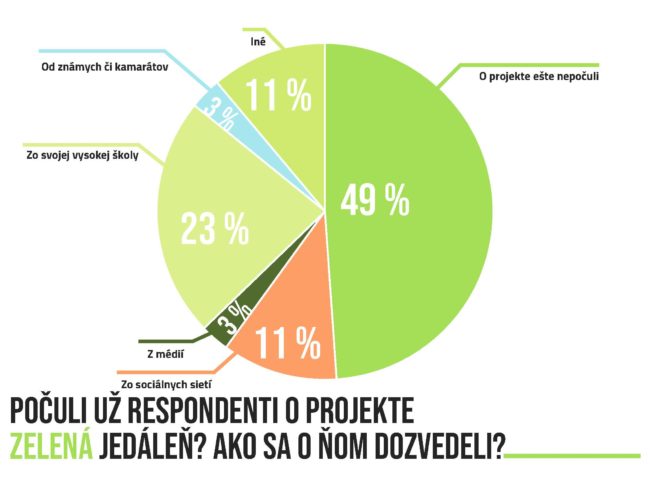
Last but not least, we were interested not only in your suggestions and ideas for introducing healthier and plant-based meals at universities, which we could implement in our Green Dining Room project to benefit from in the future, but also whether you have heard about this project at all heard.
So let's look at the answers from both areas.
- Almost half asked about Green Dining Room project still didn't hear,
- but the positive news is that 23 % respondents, for whom it was no news, were talking about it they heard just now from your university.
Doctors Green Dining Room they know:
- from social networks (11 %),
- from others sources (11 %),
- from media (3 %)
- whether from your own known and friends (3 %).
Your opinions, suggestions, ideas and observations
And what could to help introduction healthy, plant-based foods in higher education dining rooms just according to the respondents' statements?
We have selected a few most interesting reactionswhich can serve us as inspiration to improve the entire catering process at our universities.
"It's hard to convince chefs to want to cook these dishes. They cook them because they have to, and that's how it looks. Only occasionally does someone show up who's really interested."
"Lower prices"
healthier/ vegan/ vegetarian/ fit meals. A student would rather eat cheaper, not more expensive, food for lunch.”
"We need to understand more about the needs of students and other diners. We need to adapt to the trend of increasing levels of various allergies and also the trend of veganism. It is also important to understand and not combine soup with various allergens as a main dish."
"If only the issues of ecology and health were taken more seriously at universities."
PDF Presentation of survey results
You can download the entire presentation of the survey results here:
Acknowledgements
Finally, we would like to Slovak universitiesthat were with us to cooperate,
also thanked everyone respondents involved
and special thanks and companiesthat supported our research.





Author of the text: Dominika Kuklová
Photos: Image by Freepik - https://www.freepik.com
 English
  Slovenčina